
Image or video? Choosing the right production route
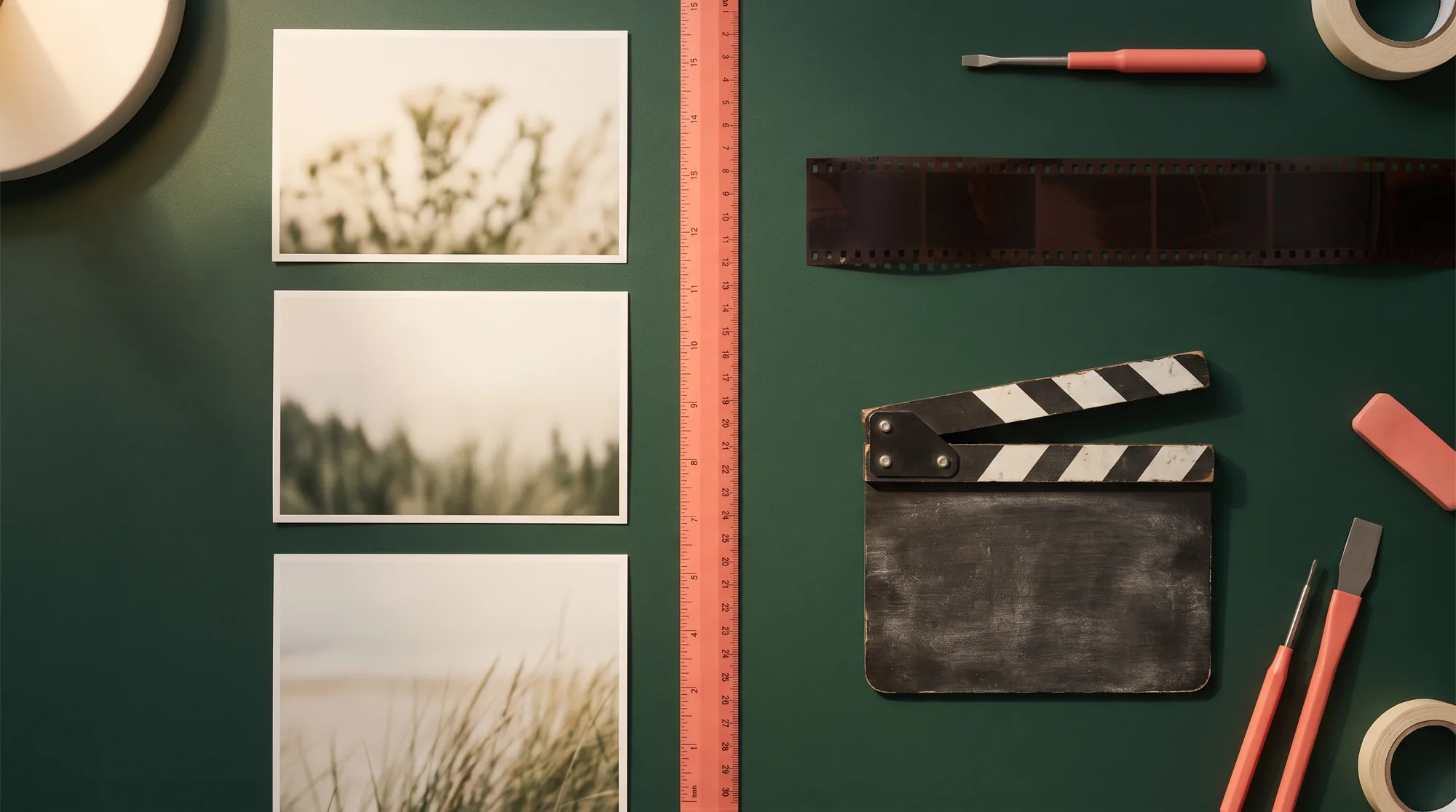
A campaign idea can often work as either an image or a video. The right choice is the format that communicates the message clearly within the available time, budget, channels, and production constraints. Which one looks more impressive is beside the point.
Choose image when the message should land at once
Images are strong when the audience needs to recognize a product, understand a visual proposition, or absorb a headline quickly. They are also useful for exploring a campaign world before committing to motion.
An image-first route may fit product launches, key visuals, and ecommerce scenes. It also covers display ads, thumbnails, editorial illustrations, and social variations. One approved direction can often be adapted into several crops and layouts, provided those needs are included in the brief.
Choose video when change is part of the idea
Video earns its complexity when the sequence matters. A transformation, a reveal, a demonstration, an emotional beat, or a before-and-after story all depend on time. Motion can also explain an unfamiliar product by showing what happens, rather than asking one frame to hold the entire story.
A video brief should define the opening hook and the key beats. It also needs an approximate duration, the destination platforms, the sound requirements, and the action the viewer should take. “A cinematic video” is not yet a production plan.
Account for continuity
Video introduces continuity requirements that a single image does not. Products, people, and clothing must stay coherent between shots, and so must the environment, the light, and the camera logic. The more recognizable the subject, the more tightly the workflow needs to control those details.
That can mean creating reference frames first, locking character or product details, planning shot transitions, and reserving time for compositing and correction. A ten-second final edit may require many more production decisions than its duration suggests.
Plan the whole asset family
People tend to frame this as image versus video. More often the question is how the two formats support each other. A campaign might need a hero video, several short cutdowns, a thumbnail, static paid-social versions, and product images that share one direction.
Planning the family together improves consistency and helps the team reuse approved visual decisions. Planning each file separately can lead to duplicated effort and a campaign that feels fragmented.
Match ambition to the approval window
Still-image exploration is generally faster to compare. Motion needs decisions about sequencing and timing, so feedback can take longer and changes may affect several shots. If the approval window is narrow, a focused concept with fewer variables is usually safer than an elaborate narrative.
Under time pressure, the safest route is the one with the fewest unresolved dependencies, which is not always the one that looks simplest to produce.
Use a hybrid route when it reduces risk
A practical workflow may begin with still frames to establish the visual world, move selected concepts into motion, and finish with editing, compositing, typography, sound, and platform adaptations. The generated material is one part of the production process. Treating it as the finished deliverable is where projects usually come apart.
Let the outcome decide
Start with the message, the audience, the channel, and the required action. Then work out whether movement adds necessary meaning. If the idea works instantly, image is probably the more efficient route. If the idea depends on progression, demonstration, or emotional timing, video may be worth the additional production system.
BriefToAsset scopes the route around the required result. Clear deliverables can move directly to a custom quote. Multi-format or unresolved campaigns may begin with paid discovery.
Ready to put this to work?
Tell us what needs to ship and we will come back with a route, a scope, and a price.
Start your brief